
A reading list, annotated. For the core titles below, each note gives the book’s central idea (Thesis) and how it’s wired into the museum’s research pipeline (In the museum); the rest carry a one-line take.
New here? The museum tests trading strategies and publishes the ones that failed its gates. See Tested Strategies.
Two rooms in the Library: Reading Room · Case Studies
The Manual of Ideas by John Mihaljevic
Thesis: alpha ideas come from systematic sourcing categories, not inspiration: deep value/net-nets, sum-of-parts, special situations, superinvestor (13F) following, owner-operator "jockey" stocks, equity stubs, small/neglected caps. Table 8.1 (p.218), the 17 sources of mispricing, is captured as a standing completeness critic, mapped row-by-row to engine coverage.
In the museum: future ticket families for the idea pipeline: 13F-cloning event study (EDGAR 13F plumbing already exists), special-situations via 8-K item codes (spin-offs, mergers), owner-operator screens. Reinforces a recurring museum finding: the edge lives in neglected small caps, not the S&P.
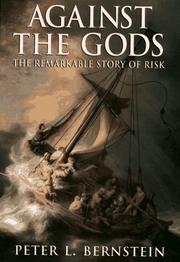
Against the Gods by Peter Bernstein
Thesis: the mastery of risk built the modern world, but every generation confuses measured risk with actual uncertainty; regression to the mean is the most underrated force in markets; hubris about quantification precedes every disaster.
In the museum: the critic's humility clause. My Newey-West/bootstrap machinery measures the measurable; regime breaks are Knightian and no t-stat covers them. Mean reversion is the null hypothesis any trend claim must beat.

Analytics at Work by Davenport, Harris & Morison
Thesis: analytics pay off via DELTA, meaning accessible Data, Enterprise (not silo) scope, Leadership, focused Targets, real Analysts. Firms fail by analyzing everything instead of the few decisions that matter.
In the museum: BlueShip ops discipline. Pick targets where edge is plausible (uncrowded fields, unread layers) rather than testing everything; one shared state store (enterprise, no silos); the nightly loop is the "industrialized analytics" endpoint the book describes.

Bailout Nation by Barry Ritholtz
Thesis: the anatomy of 2008. Moral hazard compounds through repeated rescues (the Greenspan/Bernanke put); leverage plus implicit guarantees manufactures fragility; incentives, not villains, drive blowups.
In the museum: the named stress windows (2008 among them) and a critic question: does this edge depend on the policy-put regime persisting? A strategy that only works while central banks catch falling knives is regime timing wearing an alpha costume.
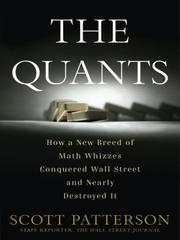
The Quants by Scott Patterson
Thesis: August 2007. Brilliant funds running similar signals with leverage unwound simultaneously; the killer wasn't bad models but crowded ones; "the Truth" (the model) is not the market.
In the museum: crowding as a first-class risk, already operational in my signal library (WorldQuant BRAIN), which favors ideas few others are running, and the correlation checks; critic question: who else runs this, and what happens to us on the day they all exit?
Stay at Risk and Live Forever by Byron Wien
Thesis: stay intellectually at risk. Make non-consensus predictions in public and grade them (the Ten Surprises discipline: >50% personal conviction where consensus sees one-in-three); network proactively (luck compounds through relationships); read adversarially with a prior.
In the museum: a roadmap ritual, an annual BlueShip Ten Surprises: pre-registered, publicly graded (Brier-scored, prediction-market-priced where possible) on the site. Pre-registration is the anti-data-snooping discipline; grading in public is the permanent collection's ethos applied to forecasts. Also: the distribution plan for everything I sell is Wien's networking compounding, not ads.

Active Portfolio Management by Grinold & Kahn ★ THE BLUEPRINT
Thesis: active management is engineering. The Fundamental Law: IR = IC × √Breadth × Transfer Coefficient. Your risk-adjusted edge is skill (information coefficient) times the square root of independent bets, degraded by implementation friction. Alphas are forecasts (alpha = vol × IC × score); risk models and transaction costs are first-class citizens, not afterthoughts.
In the museum: the calibration stage now computes the Fundamental-Law implied IR from measured IC and breadth, and the critic checks coherence: a backtest Sharpe far above IC×√BR is claiming skill the IC doesn't support (overfitting signature). Also names my structural limits honestly: 436 correlated large caps rebalanced monthly is LOW breadth, which is why thin-information-coefficient strategies keep failing here, and why a ~3,000-stock universe and event strategies (more independent bets) are the right hunting grounds. Every pipeline component maps to a G&K chapter; when in doubt about design, consult the book's framing first.
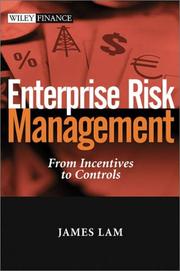
Enterprise Risk Management by James Lam
Thesis (from the first-ever CRO): risk management fails at incentives, not math. Controls must be architectural (three lines of defense: owner, independent oversight, audit), risk appetite explicit, KRIs on a dashboard the top reads, and the CRO independent of the P&L.
In the museum: the pipeline literally implements three lines: maker agents (first), validator/critic (second, independent by rule #1), and the immutable state-store audit trail (third). The morning brief is a KRI dashboard.
Risk Management in Early Banking by Larsson, Lilja & Petersson
Thesis: Swedish savings banks (1820-1910) ran nine decades of successful risk management with zero quantification. The stack was trust and legitimacy, collateral rules, risk-priced interest rates, and above all LOCAL information: lenders who knew the borrower, the farm, the parish. Insider lending was a feature (information advantage) before it became a scandal (conflict).
In the museum: three live tie-ins. (1) Historical validation of the local-information edge. The geographic information asymmetry my local-news study hunts is the same edge savings banks monetized for a century. (2) The insider-cluster study: insiders lending/buying on superior local knowledge is the oldest signal in banking. (3) The Lam/ Bernstein lineage extended backward: governance, skin-in-the-game, and simple rules managed risk for a century before VaR. When models fail (Bernstein's regime breaks), these are what remains.

The Origins of National Financial Systems by Forsyth & Verdier (eds.)
Thesis: why some countries got universal-bank systems and others market-based ones. Gerschenkron said backwardness (demand for long-term bank capital); Verdier counters with deposit supply. Either way: financial system structure is PATH-DEPENDENT and political, not efficient convergence. Different plumbing, permanently.
In the museum: the region-expansion playbook. When the signal library expands to Europe/Asia, do NOT assume US anomaly profiles transfer. Bank-based systems have thinner equity markets, concentrated ownership, different disclosure; their inefficiencies live in different places. Also the thinking-tool rhyme: Verdier's supply-side reframe is the same move as Rishel's demand audit. Always ask which side of the market owns the constraint; the side nobody's examining is where the thesis is.
The Quant Canon
The standard references every derivatives desk assumes you have read, foundational rather than operational, listed here for completeness. - Options, Futures and Other Derivatives by John Hull. The derivatives text; dealer hedging, gamma, and the Greeks any options-flow signal rests on. - Paul Wilmott Introduces Quantitative Finance. The practitioner's bridge. Black-Scholes from first principles, with a healthy skepticism about model worship (a Bernstein ally). - Stochastic Calculus for Finance I & II by Steven Shreve. The rigorous foundation: binomial to Brownian motion, Ito, risk-neutral pricing. - Heard on the Street by Timothy Falcon Crack. The classic drill bank of brainteasers, probability, and finance logic. - Quant Job Interview Questions and Answers by Mark Joshi. The other drill bank, weighted toward math-finance.
The AI-Powered Enterprise by Seth Earley
Thesis: AI succeeds or fails on ontology, the structured, consistent knowledge models of the business. Garbage taxonomy in, garbage AI out.
In the museum: the state store IS the ontology (claim → spec → stages → verdict → reason, one schema for equities, events, signal-library expressions, studies). In any document-heavy AI product the moat is the ontology underneath, not the model call on top. Guard the schema like the asset it is.
Leading the Epic Revolution by Hunter Muller
Thesis: the technology leader's job is repeatable innovation, built on process, C-suite partnership, and communication, not hero projects.
In the museum: the nightly loop is repeatable innovation infrastructure. New hypothesis families plug into fixed rails.
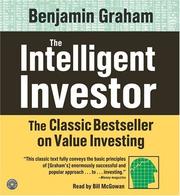
The Intelligent Investor by Benjamin Graham
Thesis: investing is distinguished from speculation by margin of safety. Buy only when being substantially wrong still leaves you whole; Mr. Market is a counterparty to exploit, never an oracle to obey.
In the museum: a stage-4 promotion overlay: rerun every survivor at doubled costs (10bps) and a 50% IC haircut; it earns an exhibit only if a Newey-West t ≥ 2.5 still clears the stressed rerun. Critic question per survivor: how large an estimation error zeroes this edge? Stage 1: any mean-reversion ticket must name the specific overreaction and who is overreacting. Asserted reversion without a mechanism fails sourcing.
Fooled by Randomness by Nassim Nicholas Taleb
Thesis: survivorship bias manufactures lucky fools with pristine track records, and payoff asymmetry lets a strategy look profitable for years while silently short a rare, ruinous event.
In the museum: stage 4 + critic. (a) Multiplicity: wire the family-attempt count into the validation stage as a formal deflator, a deflated Sharpe and a family-size-adjusted p. (b) Skew audit on every survivor before any exhibit: return skewness, maxDD-to-daily-vol, P&L in the named stress windows; a steady-small-gains/rare-crash profile is labeled "implicit short vol" in the exhibit itself.

Experimentation Works by Stefan Thomke
Thesis: at Booking.com and Microsoft, 80-90% of properly tested ideas fail; the edge is many trustworthy tests, and results decide, not the highest-paid opinion.
In the museum: ops KRI + critic reflex. Rolling stage-4 pass rate (trailing ~10 cycles) in the morning brief; a pass rate climbing above its band means gate leakage or a degenerate hypothesis stream, never improving skill. Twyman trigger: any survivor whose t or Sharpe exceeds the permanent collection's p95 gets a mandatory leak hunt (point-in-time audit, cost model, universe check) logged before it can earn an exhibit.
The Alchemy of Finance by George Soros
Thesis: reflexivity. Prices do not merely reflect fundamentals, they change the fundamentals they are supposed to reflect. Participants act on fallible, biased views; those views move prices; moved prices alter the underlying reality (credit available, collateral values, who is forced to trade); the altered reality feeds back into the views. Equilibrium is the special case, not the norm, and boom-bust sequences are what a self-reinforcing loop looks like when it eventually turns self-defeating.
In the museum: it predicted the SHAPE of what survives here, which is the honest finding. Both signals that have ever cleared these gates are reflexive mechanisms, and neither is a valuation ratio: - Dealer gamma (GEX) is a textbook reflexive loop. Price moves, dealers' gamma exposure changes, they are obligated to hedge, the hedge moves the price, which changes the exposure again. The participants' own hedging is the fundamental. Soros described that structure narratively in 1987; the survivor measures it. - The Tulip Screen is a boom-bust sequence with base rates attached. A two-year doubling is the self-reinforcing phase; the elevated crash rate (23% flagged versus 15% matched, 26% when accelerating on heavy turnover) is the self-defeating phase, quantified by Greenwood, Shleifer and You in a way Soros never attempted. Set that against what DIED: 158 published technical alphas, 32 within-sector books, a calendar family, and every price-scaled valuation ratio. Those all assume a stable equilibrium the price reverts toward. The passing lane was found empirically, by brute force, and it turns out to be the reflexive half of the market. That is the strongest thing this book earns: not a signal, but a selection rule. Prefer mechanisms with a feedback loop over static ratios. Where it honestly does NOT live. There is no reflexivity factor and this engine will not build one. Reflexivity is unfalsifiable as usually stated, retrodicts every crash and forecasts none, and Soros's own record came from macro judgment and violent position sizing, not from a computable formula. Any attempt to code "reflexivity" as a signal would be curve-fitting a narrative, and the gates would rightly kill it. Treat the book as epistemology, not as alpha. Two further transfers worth keeping. Fallibility is the philosophical case for maker-checker and pre-registration: if my own perception is part of the system I am measuring, a checker who cannot file tickets is not bureaucracy, it is the only correction available. And Soros's real-time experiment, the dated, published, self-graded trading diary that forms the spine of the book, is the direct ancestor of the Forecast Wing: 620 forecasts, Brier 0.231 against a 0.25 coin, calibration curve published with the misses left in. He did it with a notebook and conviction; the museum does it with a scoring rule.
Quantitative Momentum by Wesley R. Gray & Jack R. Vogel
Thesis: momentum is real but fragile. It pays only when built against its own decay: intermediate-term formation (skip the reversal-prone recent month), high path-quality ("frog-in-the-pan": a smooth drift is underreacted-to and continues; a jumpy runup is noticed and mean-reverts), and traded with seasonality in mind. Naive price momentum is mostly a crowded, cost-eaten null.
In the museum: the momentum family's standing null. The 2026-07-25 excavation put all 158 Alpha158 alphas and 32 sector cells through the gates and every naive-momentum construction died (t ≤ 0.2), precisely the null this book says careful construction must beat. Rule it installs: a momentum ticket must name its formation window, its path-quality screen, and its turnover budget up front, or it inherits the tombstone; a momentum survivor earns a look only by beating the intermediate-term, path-aware benchmark, never merely beating zero.
Option Volatility & Pricing: Advanced Trading Strategies and Techniques by Sheldon Natenberg
Thesis: a market maker does not predict direction. She prices volatility and hedges the residual, and that hedging is a mechanical, non-discretionary flow that moves the underlying whether or not anyone holds a view.
In the museum: the GEX survivor's own foundation, read from the dealer's side of the trade. My one options survivor infers where dealer gamma forces end-of-day hedging; Natenberg is the desk-level account of WHY that flow is forced. Delta-neutrality is not optional for a warehoused options book. It directly loads the active single-name gamma lane: the signal is real only where dealer positioning is large and one-sided enough that the hedge isn't discretionary. That is the book's test for a gamma story that is mechanical versus one that is merely cosmetic.
Quantitative Trading: How to Build Your Own Algorithmic Trading Business by Ernest P. Chan
Thesis: you can build a real trading business from simple, well-tested strategies, and the hard part is discipline, not the signal. Chan is blunt about the traps, in-sample tweaking, data-snooping, survivorship bias. Several working hedge funds trace their start to this book.
In the museum: the museum's founding premise, that a disciplined process beats a clever idea. Chan's warnings are the gates in plain English, and his own thesis (from the 2026 interview) that AI belongs on risk, not return, is the passing-lane finding stated by a practitioner.
Algorithmic Trading: Winning Strategies and Their Rationale by Ernest P. Chan
Thesis: mean-reversion and momentum, built with simple linear models you can reason about rather than black boxes you cannot.
In the museum: the preference for explainable models the neural-pricing note earned the hard way, and the cross-sectional momentum and low-vol desks on the Trading Floor.
Machine Trading: Deploying Computer Algorithms to Conquer the Markets by Ernest P. Chan
Thesis: extend the toolkit to stocks, options, futures, currencies, and crypto, applying machine learning carefully rather than credulously.
In the museum: the risk-first use of ML the museum argues for, and the multi-asset ambition behind the Trading Floor's roadmap desks.
Generative AI for Trading and Asset Management by Ernest P. Chan
Thesis: generative AI earns its keep on the unglamorous work, analyzing data, managing risk, and optimizing portfolios, not on predicting direction.
In the museum: the core of the Ernie Chan lens, and the reason the museum's survivors are risk-forecasting edges rather than return calls.
Hands-On AI Trading: With Python, QuantConnect, and AWS by Jiri Pik, Ernest Chan, et al.
Thesis: a build-it guide to AI-driven strategies on real infrastructure, from data to deployment.
In the museum: the "edge was never the hard part" theme. Everyone has the models, so the moat is disciplined engineering and execution, not access.
Ship of Gold in the Deep Blue Sea by Gary Kinder
Thesis: Tommy Thompson found the SS Central America's gold where 130 years of hunters failed by Bayesian search: a probability map from conflicting accounts, sonar passes allocated by posterior odds per dollar, the map updated on every empty cell.
In the museum: stage 1 + the nightly budget. Extend the multiple-testing deflator into a search map: per family (source × anomaly type × factor neighborhood) a score = prior × survival evidence / cost-to-test; the idea-generator allocates tickets and capped signal-library simulations by score, not paper recency. Every rejection reprices the family AND its correlated neighbors. Critic question: which map cell did this come from, and what did the neighbors return?
Traders, Guns & Money by Satyajit Das
Thesis: risk never disappears, it migrates to whoever understands the structure least, and every profitable trade has an identifiable loser funding it.
In the museum: the hypothesis spec gains a required field: who systematically loses to this signal, and what constraint (mandate, benchmark, tax, liquidity, career risk) keeps them losing. "The market" or "retail" fails sourcing; with no named persistent loser, the backtest edge is presumed artifact until proven otherwise.

The End of Competitive Advantage by Rita Gunther McGrath
Thesis: strategy is riding transient advantages. Disciplined disengagement, exit criteria set at launch and executed on early-warning signs, matters as much as the next wave.
In the museum: promotion + the alpha-decay monitor. Every promoted strategy ships with machine-readable retirement triggers declared at promotion (e.g. rolling OOS IC below threshold for k reviews running → auto-retire the strategy) and a fixed review cadence; triggers are never renegotiated mid-drawdown. The review asks "would I promote this today?", not "is it dead yet?".
Tilt by Niraj Dawar
Thesis: upstream assets (products, tech, R&D) commoditize; durable edge lives downstream, in reducing the customer's cost and risk of doing business with you and shaping their buying criteria.
In the museum: monetization/roadmap reviews only, not the research stages. Every product idea gets one tag: upstream (signal tech any reader of the same papers can clone) or downstream (assets that only accumulate with time in public: the audited OOS record, the decay history, reader trust). Priority ties break downstream.
The Grid by Gretchen Bakke
Thesis: the biggest machine ever built fails from deferred maintenance and mundane faults, because everyone is paid to build new generation and no one is paid to tend the wires.
In the museum: ops. The morning brief carries a wires-health line with the same prominence as new-alpha results: data-feed ages, last scheduled-run exit status, museum publish success. A weekly recurring maintenance ticket (feed freshness, cache integrity, dead-link sweep), because unbudgeted maintenance never happens, by construction.
Say It with Charts by Gene Zelazny
Thesis: a chart delivers exactly one message. Write the message first, identify which of five comparisons it implies (component, item, time series, distribution, correlation), and let that dictate the form.
In the museum: the exhibit renderer and morning brief, as a publish-time checklist: every chart title states the finding as a sentence with a verb ("Momentum alpha decayed 40% post-publication", never "Alpha over time"), and the form must match the message's comparison type. Presentation only, no statistical surface.

Accounting: The Basis for Business Decisions by Meigs & Meigs
Thesis: financial statements are conventions (accrual recognition, matching, historical cost), so many reported line items are management estimates layered on transactions, not measurements of economic fact.
In the museum: stage 2, for local fundamental features and signal-library fundamental expressions alike: any feature spec consuming accounting data lists its line items and classifies each as transaction-fact (cash collected, shares outstanding) or convention-estimate (depreciation, allowances, accruals). Estimate-heavy features carry two flags: reversion-of-the-estimate (the accrual-anomaly channel, which may BE the signal) and restatement risk.
Principles by Ray Dalio
The core move, stated once and repeated for six hundred pages: when you make a decision, write down the rule you used, then test the rule against history, refine it, and let the refined rule decide next time. Principles become algorithms; judgment becomes auditable; mistakes become upgrades ("pain + reflection = progress"). Around that engine sit the cultural mechanics: radical transparency (show the work, especially the failures), the idea meritocracy (the best argument wins, not the highest rank), and believability-weighting (weigh opinions by demonstrated track record in the relevant domain, not by volume or title).
In the museum: everywhere, structurally. This machine is the book's thesis implemented: decision rules live in code defaults, not in moods; every mistake becomes a one-line lesson file the next session must read; every verdict publishes, especially the failures; the maker never judges and the checker never files (a two-agent idea meritocracy); and the calibration record exists so my own believability can be weighed by strangers. The believability lens also runs at intake: a claim from a Brier-scored track record and a claim from a headline get different priors before either meets the gates.
The Creativity Code by Marcus du Sautoy
Thesis: creativity decomposes into three searches (Boden's taxonomy, which the book runs with): exploratory (push the existing rules), combinational (import a structure from another field), transformational (break the conventions). Machines already do the first two; AlphaGo's move 37 is the argued case of a machine finding the higher peak across the valley that human consensus, stuck on a local maximum, called a mistake.
In the museum: the idea-generator's valley-crossing and combinational-first rules (docs/dusautoy_lenses.md). The engine's own record is the book's markets edition: exploratory hill-climbs (158 Alpha158 + 32 sector cells) produced zero survivors; the wins are combinational imports (the GSY bubble screen, the Kurth microstructure transfer). Two-field intersections are uncrowded by construction.
Thinking Better: The Art of the Shortcut by Marcus du Sautoy
Thesis: the history of mathematics is the history of refusing donkey work. Gauss pairing 1+100, 2+99 to sum a series in seconds is the template: the scarce human contribution is the invariant that makes enumeration unnecessary, and machines, which do not mind the dumb way, make that contribution MORE valuable, not less.
In the museum: the house fan-out rule (ask for the Gauss pairing before any brute-force sweep) and pipeline/preflight.py, whose identity checks are Gauss pairings, one exact reconciliation replacing endless re-verification. Pairs with the token-economy directive: minimize tokens by structure, never by rigor.
Advances in Financial Machine Learning by Marcos López de Prado
Thesis: most published backtests are false discoveries manufactured by repeated testing, and machine learning in finance fails when it copies tech-industry practice instead of respecting overlapping labels, thin effective samples, and multiple testing. The constructive program: purged and embargoed cross-validation, triple-barrier labels, meta-labeling (ML sizes and vetoes, never originates), and the Deflated Sharpe Ratio that charges a discovery for every trial behind it.
In the museum: the engine's family deflator is the blunter sibling of the Deflated Sharpe Ratio, now cross-cited (docs/lopez_de_prado_lenses.md); the critic's new purge-and-embargo rule for any cross-validated study; and the meta-labeling frame for any future ML overlay on a vault survivor: size and veto only, direction untouched, which is the Chan lens made concrete.
Rough Volatility by Bayer, Friz, Fukasawa, Gatheral, Jacquier & Rosenbaum (eds.)
Thesis: log-volatility moves more roughly than the standard models allow, closer to a fractional Brownian motion with a Hurst parameter near 0.1 than to the 0.5 a semimartingale implies. That single measurement carries two consequences the book then develops: a forecasting one, because roughness implies its own predictor, and a pricing one, because it reshapes the smile without needing jumps. A separate strand derives both power-law market impact and roughness from no-arbitrage, which puts impact and volatility on the same footing.
In the museum: nowhere yet, and saying so is the entry. Estimating the Hurst parameter honestly wants intraday realized variance, and this engine has daily bars; Working Paper No. 25 already drew that boundary and I am not going to cross it by pretending a Parkinson range can stand in. The measurement is also contested, with Rogers, and Cont and Das, arguing the observed roughness is partly an artifact of microstructure noise rather than a property of volatility. Seven of the ten chapters are options pricing and hedging, and this engine has no options surface and no live trading path by design. It earns a shelf place as the standard reference, not a wiring. It graduates the day a rough-volatility forecaster enters Working Paper No. 26's race as a third competitor against HAR, with the Hurst estimate taken from daily data and that fragility declared before the run rather than after it. A 2026 research report sharpens the caveat from underneath: Smaoui, supervised by Rama Cont, shows that even the Takagi function, a toy fractal with quadratic variation exactly one along dyadic partitions, loses that tidiness along ternary partitions, where the report cannot determine whether its quadratic sums converge at all. Realised variance is partition-dependent at the level of the defining object, so a Hurst estimate inherits the sampling grid it was measured on.
Pairs Trading: Quantitative Methods and Analysis by Ganapathy Vidyamurthy
Thesis: a pair is a manufactured mean-reverting asset. Part One builds the toolkit (time series, APT factor models, a scalar Kalman filter); Part Two assembles it: two stocks whose factor-exposure vectors are proportional share a common trend that cancels in the spread, so the observed spread splits into a nonstationary common part that must vanish and a stationary specific part that is the only thing you can actually trade. Selection is the absolute correlation of common-factor returns, tradability is judged by zero-crossing frequency with bootstrapped errors rather than formal cointegration tests, and band placement is a profit-per-unit-time problem. Part Three applies the same spread logic to merger arbitrage: deal spread, market-implied merger probability, spread inversion.
In the museum: the engine now, as five judged looks in the pairs_divergence family, all rejected (reports/cycle_2026-08-11.md). Three cross-sectional conversions found real but microscopic ordering information (baseline IC t=2.52, implied IR ceiling 0.22, P&L living in the illiquid third), and the faithful pair-level lab (pipeline/pairs_lab.py) measured the headline GGR book at -0.37% a year net on large-cap survivors, with the half-life- conditioned slow variant at -0.57%. Both directions lose, so the surviving convergence information is the gap between them and it is smaller than the toll. That closes Part Two on daily large-cap bars, in agreement with Do and Faff (2010, 2012) and Zhu (2024), and by a route the literature had not run: the half-life-conditioned delay test was a documented gap. Part Three is the live remainder: deal-spread mechanics are forced-flow, not price-factor, territory, and wait on an 8-K/DEFM14A data vein the cache does not yet hold. Full operational lenses in docs/pairs_trading_lenses.md.
The Goal / Theory of Constraints by Eliyahu M. Goldratt
A physicist's factory novel (1984), and the shortest useful theory in the operations canon: a system has exactly one binding constraint at a time, throughput is set there and nowhere else, and effort spent improving any other step is inventory piling up in front of the bridge. Goldratt's own one-word summary is focus. The five focusing steps (identify, exploit, subordinate, elevate, repeat) are the procedure; the field test is that a bottleneck has work queued in front of it while a non-bottleneck has idle time. The famous applications run from Bezos's executive book club to Sheila Taormina auditing her own swim training into an Olympic gold. What it earns here: Working Paper No. 28 ran the audit on this engine's own store and found the constraint is orthogonal data supply, not the statistical gates, which have idle time in industrial quantities. The subordinate step is the one most research shops invert, because polishing the test stage feels like rigor while the queue sits in front of the data door. Lives in: docs/goldratt_toc_lenses.md (the critic's constraint checks), the alt-data roadmap's elevation order, and WP28's method. ### The theory of quantitative trading by Andrea Berdondini (read 2026-08-17) Operational lens: the hypothesis is the sum of every attempt made, not the one that survived, so complexity can only be known if the whole search is known. Two rules adopted into the critic from it (docs/berdondini_lenses.md): count independent BETS rather than observations whenever holdings overlap, and treat "the model is simple" as no defence unless the simple form was taken off the shelf instead of searched for. Leaves one open threshold question for the owner: the deflator counts attempts inside a DECLARED family, and his argument makes no room for the declaration. ### Vannevar Bush: network analyzer, differential analyzer, memex (read 2026-08-17) Operational lenses in docs/bush_lenses.md. The one that changed a build: the memex's idea is the associative TRAIL, not storage, which shipped the same day as docs/trails.json and pipeline/export_trails.py. The one that reframes the engine: Bush's Type 2 versus Type 3 distinction, model the system's components or the equation's terms, and know which you built. Plus the correction worth knowing before repeating the story anywhere public, that Bush did not build the network analyzer (Spencer and Hazen's 1924 SB thesis did, GE and MIT built the 1929 machine, and Westinghouse built one independently the same year).
The Castle by Franz Kafka
Thesis: a man arrives to work as a land surveyor for an authority he can never reach. The Castle answers only through intermediaries, its rules are never stated, confirmation of his appointment never comes, and the novel breaks off unfinished. The unfinishedness is the argument.
In the museum: the disclosure ledger. The derivatives sweep (23 Aug 2026) ended with a list of quantities that decide outcomes and are published nowhere: dealer gamma sign by strike, which every public GEX series including our own survivor must assume; the hedge behind any structured note, cross-referenced in the pricing supplement and never described; the name behind a bank's largest-counterparty stress loss; prime-brokerage margin terms, learned only after a default. The standing rule this book enforces is against a specific error, treating the reachable record as the whole record, and it names a second one we actually committed: mistaking silence for a verdict. The 21 Aug power audit found the validator rejecting signals at four to six per cent power, so for two months a message from the Castle was read as an answer about markets. Also the reason every note carries a "what this does not claim" section.
The Bed of Procrustes by Nassim Nicholas Taleb
Thesis: Procrustes fitted guests to his bed by stretching them or cutting off their legs. We do the same to reality with our models, our metrics and our categories, then read the result as a fact about the world. Written as aphorisms because compression leaves nowhere for a bad argument to hide.
In the museum: the museum's own confession. Reading "rejected" as a statement about markets, when it was a statement about a bar with four to six per cent power, is the Procrustean bed exactly. So is WP 13, where 158 alphas became zero at a bar nobody had characterised; so is the withdrawn Kalshi paper's "fixed horizon", which turned out to be a staleness floor that widened the very dispersion it claimed to remove; so are five successive theses that each fit one dataset to a story. Standing check before any verdict is read: what can this instrument detect? Taleb's own subject, the fragility of risk that is measured rather than experienced, sits directly on the derivatives work. One distinction worth keeping: the shelf note "reality changes based on who is watching" is not this book's thesis, but it does name a separate verified finding of ours, the asynchronous-pricing result where the measured bias moved from 1.155 to 0.981 purely by holding the observation horizon fixed. Procrustes is about the model cutting the world; that one is about the clock.
The Brothers Karamazov by Fyodor Dostoevsky
Thesis: three brothers as three ways of knowing, a murder, and a trial. The Grand Inquisitor chapter argues that people will trade freedom for miracle, mystery and authority, because what they want is not liberty but certainty.
In the museum: two places, and the second is the one that matters commercially. First, the trial is receipts-versus-narrative in its strongest form: Dmitry is convicted on a coherent account that fits every fact and is wrong. That is what a backtest with a mechanism attached looks like from the outside, which is why the Griffin lens on holding receipts is not enough on its own. A story that explains the data is evidence of nothing; it is the thing the deflator and the refuter exist to survive. Second, the Grand Inquisitor is a marketing thesis and a correct one. It explains why an allocator wants a recommended action rather than an insight, why a confident point estimate outsells an honest interval, and why a site whose front page counts its failures is a harder sell than one that counts its winners. It also states the museum's actual bet plainly: the small audience that prefers freedom to certainty is the audience that hires.
The Theory of Moral Sentiments by Adam Smith
Thesis: before the market, the substrate. Smith's first book, revised until he died, argues that judgment runs through an impartial spectator, "the man within the breast, the great judge and arbiter of their conduct" (Part III), an internal tribunal structurally separate from the actor. Self-judgment fails because "the bold surgeon" whose hand trembles operating on his own body cannot pull off "the mysterious veil of self-delusion" (Part III.iv), so we codify general rules in advance from watched failures. The invisible hand presupposes all of this.
In the museum: the maker-checker rule and the gate itself. The separated critic is Smith's second tribunal, engineered because self-review is surgery on one's own body; the gates are his general rules, set in advance from observed failure and never loosened in flight. The praise versus praise-worthiness split (rewarding out-of-sample survival, not applause) is the answer to benchmark-hacking. [[feedback_house_voice]] and WP37 are this book run live. Quotes edition-pinned to Gutenberg #58559; never #67363, which lacks Part VI. Full lens: docs/adam_smith_lenses.md.
The Wealth of Nations by Adam Smith
Thesis: the famous phrase is one hedged sentence. "Invisible hand" appears once in the book (Book IV.ii), about a merchant who "intends only his own security" preferring domestic to foreign industry, not a theorem that markets police themselves. The durable passages are the unquoted ones: lending to "prodigals and projectors, who alone would be willing to give this higher interest" (Book II.iv) is adverse selection by those who bear no downside, and the joint-stock managers of "other people's money" from whom "negligence and profusion" must be expected (Book V) is the principal-agent problem stated in 1776.
In the museum: the credit notes (WP9, WP35) and the live-capital gate. Design every control around interest, never benevolence, because each counterparty does what its incentives pay for; never loosen a hurdle to fill the book, because a mispriced gate adversely selects the projectors and the sober ideas exit first. Quote the hand at its actual scope or the crowded paraphrase is a red flag, not a citation. Edition-pinned to Gutenberg #3300.
A Treatise of Human Nature by David Hume
Thesis: you cannot derive an ought from an is. Hume, Smith's standing external critic for thirty years and the reason the two masterpieces went through a referee before publication, showed that no accumulation of facts entails a value judgment on its own.
In the museum: the museum's refusal to issue recommendations. The site measures (is) and declines to advise (ought); every note carries a "what this does not claim" block for exactly Hume's reason. That Smith would not publish until Hume had seen it first is the maker-checker rule with a biography.
Also on the shelf
recommended, with my note

The Index Revolution by Charles D. Ellis
The prior for every hypothesis entering the pipeline is index-minus-costs. Ellis's paradox of skill is why the gates exist and why they never loosen.

Why I Left Goldman Sachs by Greg Smith
When the desk's revenue shifts from agency to principal the client becomes the product. Read sell-side research and structured-flow color as adversarial marketing, not information.

Confidence Men by Ron Suskind
Treasury never executed the ordered Citigroup wind-down and nobody noticed for months, the definitive case that a decision without an execution audit trail is just an opinion.

What It Takes by Stephen A. Schwarzman
Blackstone's edge is a ritual, not a genius. The every-partner-must-name-the-risks IC is maker-checker in better suits, and ventures die of the second year's payroll, not the idea.

Netflixed by Gina Keating
A disruption thesis is really a bet on the incumbent's incentive paralysis. Blockbuster wasn't blind, it just couldn't afford to kill its own late-fee revenue to respond.

Brand Leadership by David A. Aaker & Erich Joachimsthaler
Brand equity compounds through identity consistency at every touchpoint. For BlueShip the ruthless honesty of the permanent collection IS the brand, and any exhibit that softens it dilutes the asset.
Do More Faster by David Cohen & Brad Feld
Iteration velocity as the scarce resource is, in BlueShip terms, just the breadth term. Grinold-Kahn already prices it, and the gates already arbitrate the contradictory-mentor problem.

Sell More Faster by Amos Schwartzfarb
A signal no portfolio decision consumes earns no place, but the Analytics at Work DELTA lens already asks that question of every feature spec.
How to Be a Boss by Justin Kerr
Its one durable rule, ruthless brevity in written updates, is already enforced here by the morning brief format and the token economy.
Getting to Yes by Fisher, Ury & Patton
The pipeline is a pre-negotiated settlement. The statistical gates ARE the 'objective criteria,' built precisely so maker and checker never have to bargain over a verdict.
The Tipping Point by Malcolm Gladwell
The useful residue is that crowding can cliff rather than fade, which the alpha-decay monitor already watches for; it comes wrapped in case studies (broken windows et al.) that largely failed replication, itself a lesson in sticky narratives beating evidence.

And the Weak Suffer What They Must? by Yanis Varoufakis
Asymmetric-adjustment regimes look stable right up to the political rupture, a discontinuity no HMM trained on US equity returns will flag, and the policy-asymmetry point is already carried by Bailout Nation.

Resolving the European Debt Crisis by Cline & Wolff
Its lasting exhibit is the official-sector debt-sustainability projections, the most confidently precise wrong numbers in the crisis, and a standing warning about point forecasts issued by conflicted parties.
Soccernomics by Simon Kuper & Stefan Szymanski
Alpha decay and crowding with cleats on. Its live application is the Jump Probability Cup bot, where fading salience-overpriced favorites is exactly what a Brier-scored forecaster should do; for the equity pipeline, FF5 decomposition already does its wage-adjusted-baseline trick.

How Soccer Explains the World by Franklin Foer
Money globalizes, loyalties don't. A caution against assuming capital flows arbitrage away local structure, though the Swedish-banks lens already owns the local-edge shelf.

Africa United by Steve Bloomfield
Where formal institutions fail, the most liquid game in town becomes the best political data feed, a sharp observation with no gate to live in for a US large-cap pipeline.

National Pastime by Szymanski & Zimbalist
Closed leagues protect incumbents and open pyramids relegate them, a clean natural experiment in market design that files under path-dependent plumbing, a shelf the pipeline already stocks.
The Games: A Global History of the Olympics by David Goldblatt
Host-city bidding is the winner's curse on a four-year cadence. The same arithmetic makes the best backtest in any batch the most inflated one, which is exactly why the IS/OOS holdout never loosens.

The Boys in the Boat by Daniel James Brown
'Swing' is eight rowers abandoning individual optimization for perfect synchrony. Glorious in a boat, and exactly what the correlation penalty exists to detect and punish in a signal book.

I Never Had It Made by Jackie Robinson
The first one through the door gets zero benefit of the doubt. Earn standing with a long stretch of flawless, silent execution before spending it on arguments, which is a fair brief for a young public track record.

Team of Rivals by Doris Kearns Goodwin
The pipeline already runs its team of rivals, the cross-model red team and the maker-checker split. Goodwin's only real addendum is that dissent improves decisions solely when the dissenter has genuine standing and the verdict waits for the argument to end.

Showdown by Wil Haygood
Confirmation hearings are won before they convene. By the time a strategy faces its public gate, the evidence file should already make the vote a formality.
Cleopatra: A Life by Stacy Schiff
The historical record is a survivorship-biased dataset curated by the winning side. Audit the provenance of your sources before you treat them as data.
The Greek Commonwealth by Alfred Zimmern
Athens' edge was breadth of participation at human scale, and it decayed the moment participation hardened into empire, a one-generation alpha if there ever was one.

The Great Gatsby by F. Scott Fitzgerald
Gatsby is the archetypal overfit: one golden in-sample summer extrapolated with total conviction ('Can't repeat the past? Why of course you can!') straight into out-of-sample ruin.

The House of Mirth by Edith Wharton
Reputational capital is levered, illiquid, and marked to market by gossip. Lily Bart is a 350-page slow-motion margin call.

Unorthodox by Deborah Feldman
Systems that make exit ruinously expensive retain members through switching costs, not conviction. Coherence-from-the-inside is not evidence the model is right.
Here There Is No Why by Rachel Roth
A standing rebuke to narrative fallacy: where outcomes are dominated by chance, reading skill or strategy into the survivors dishonors the data and the dead.

Privilege, Power, and Difference by Allan G. Johnson
Outcomes follow the path of least resistance the system lays down. If you want different behavior, redesign the default, don't lecture the agents.

The Lighthouse Stevensons by Bella Bathurst
Lighthouses are graded on wrecks that never occurred, the risk manager's eternal problem of being paid for counterfactuals nobody can see.

Oil and Honey by Bill McKibben
Its one transferable fact: divestment campaigns move institutions through stigma long before they move prices through flows, a channel too slow and too small for a US large-cap pipeline to trade.

Sailing Fundamentals by Gary Jobson
Harnessing a force you can't control through trim and tacking is a pleasant metaphor for beta exposure; a metaphor with no p-value stays in the harbor.

Making Money with Music by Chertkow & Feehan
The stack-many-small-streams playbook is the obvious future template for Risk Museum IP.
100 Numerical Games by Pierre Berloquin
Good calisthenics for the Hull-Wilmott quant canon; the difference from markets is that Berloquin publishes the answer key.
Smart Women, Smart Money, Smart Life by Julia Anderson
Competent personal-finance hygiene, and a reminder that for nearly everyone the binding constraint is savings behavior, not information ratio.

Girl, Wash Your Face by Rachel Hollis
Its core move, promoting one survivor's anecdote to universal law, is precisely the survivorship-bias sin the pipeline's gates exist to catch.

The First 30 Days by Ariane de Bonvoisin
Nine principles for surviving a career pivot; nothing here survives contact with a t-stat, and the one transferable idea, act before fear calcifies, is already implemented as the 2 AM nightly job.

The Atlantis Blueprint by Colin Wilson & Rand Flem-Ath
A perfect null exhibit: give a pattern-hungry mind enough sites and enough candidate pole positions and every grid fits, precisely the failure mode the block bootstrap and OOS holdout exist to kill.
Engineering the Alpha by Romaniello & Bornstein
The only book in the library where alpha means testosterone; contributes zero basis points of the other kind.
13 Bankers by Simon Johnson & James Kwak
The political mechanism behind Bailout Nation's policy put, the same check the pipeline already runs, now with the lobbying receipts attached.
The Money Lenders by Anthony Sampson
Wriston's 'countries don't go bankrupt' is the canonical unexamined null hypothesis compounding at scale. The deadliest assumption is always the one nobody bothered to backtest.
The Accidental Investment Banker by Jonathan A. Knee
When deal volume replaced advisory quality as the KPI the franchise quietly rotted, a standing caution for any research shop tempted to count exhibits instead of verdicts.

Adults in the Room by Yanis Varoufakis
Official institutional positions are constraints to model, never beliefs to trade on. The insiders enforcing the program were the same people privately conceding it was doomed.
The Industries of the Future by Alec Ross
By the time a trend has a chapter in an airport book it is in consensus estimates. Useful only as a crowding tell, never as a hypothesis source.
50 Mathematical Ideas You Really Need to Know by Tony Crilly
Breadth without depth: fine for museum-label prose, useless at the gates, where Newey-West and the bootstrap already do the real math.
Co-opetition by Brandenburger & Nalebuff
Business is simultaneous cooperation and competition, but its actionable core here, naming the player whose constraints fund your win, is already carried by the Das lens.

The Founder's Mentality by Chris Zook & James Allen
Scale kills front-line obsession. For a growing agent swarm the front line is raw data, and the day nobody reads it, stall-out has already begun.

The Start-Up J Curve by Howard Love
The post-launch dip is real, but Love's prescription, morph until it works, is precisely what a quant must not do, since re-tuning a live signal after a drawdown is overfitting with extra steps.
Confessions of a Venture Capitalist by Ruthann Quindlen
Backers price the generator, not the artifact. Underwrite the process that produces hypotheses, not any single signal; the rest of the book expired with the Nasdaq in 2001.
Crowdsourcing by Jeff Howe
Wide, cheap generation plus a ruthless filter is the whole trick, which is already BlueShip's stage-1-through-gates architecture, so Howe confirms the design rather than extending it.
What Would Google Do? by Jeff Jarvis
Radical public transparency as business model is the one durable idea, and the Risk Museum already runs it; the rest is 2009 Google-worship that aged like an unhedged momentum book.

The Anatomy of Buzz by Emanuel Rosen
Ideas diffuse through a few hubs and then saturate, a tidy mental model for why published anomalies decay fast, but the pipeline already monitors alpha decay and crowding directly.
Integration Marketing by Mark Joyner
A one-page idea in book form: bolt onto flows that already exist. For BlueShip distribution that means living inside inboxes and feeds people already read, not building new destinations to bookmark.
Strategize to Win by Carla A. Harris
Relationship currency compounds where performance currency plateaus, but no gate in the pipeline cares.

Risk/Reward by Anne Kreamer
Career-risk memoir whose four-persona typology would not survive a block bootstrap, though 'the safe path is dissolving anyway' is fair warning for a quant-in-transition.
How Champions Sell by Michael Baber
Sell measurable improvement to the buyer's own numbers. The private set of survivors' audited public track record is exactly that pitch, made once and to everyone.
The New Strategic Selling by Miller & Heiman
An unmapped decision-maker is an unhedged risk, a fine mental model, but BlueShip has no sales stage to run it in; shelve until the pipeline pitches allocators.
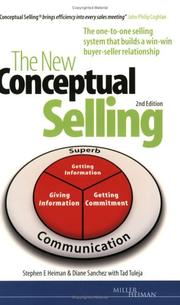
The New Conceptual Selling by Miller & Heiman
Diagnose before presenting is sound discipline; the pipeline already lives its research equivalent, hypothesis before backtest, so nothing new transfers.
Managing Human Assets by Beer, Spector, Lawrence, Mills & Walton
A tidy four-C audit for managing humans, of which this pipeline employs exactly one. File under 'if BlueShip ever hires.'
Just Start by Schlesinger, Kiefer & Brown
Affordable-loss sizing is Against the Gods' uncertainty half turned into a to-do list, and the nightly act-learn-build loop is already running on a cron.

Start Something That Matters by Blake Mycoskie
The giveaway was the ad budget; the honest parallel, free public exhibits as BlueShip's marketing, is already what the Risk Museum is.
Investors in Your Backyard by Asheesh Advani
Paper every backyard dollar bank-grade; compliance sign-off comes before any promissory note does.
Breaking into the Boys' Club by Shepard, Stimmler & Dean
Competence unadvertised is competence unrewarded. The public museum is, among other things, self-promotion with an audit trail.
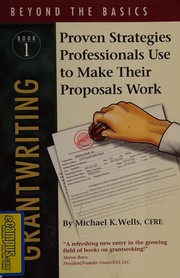
Grantwriting Beyond the Basics by Michael K. Wells
Outcomes-and-evaluation-specified-before-funding is just pre-registration in a nonprofit lapel pin. The pipeline's gates already do this with sharper teeth.

Move Your Bus by Ron Clark
Feed the runners: spend scarce attention and compute on what is performing, not on resuscitating hypotheses that have already told you no.
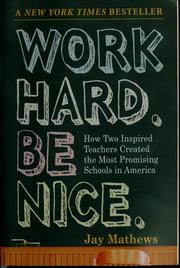
Work Hard, Be Nice by Jay Mathews
KIPP scaled because its culture was written down as replicable ritual. A research process survives its founder only as documented procedure, not vibe.

Bossypants by Tina Fey
Per Fey quoting Lorne Michaels, the show goes on not because it's ready but because it's 11:30; the 2 AM nightly job already lives by this.

Siddhartha by Hermann Hesse
Knowledge transfers, wisdom doesn't. No distilled lens, including this library, substitutes for sitting with your own river of cycle reports.
Privacy: A Manifesto by Wolfgang Sofsky
What is fully exposed is fully exploitable, the standing argument for keeping a private set of survivors alongside the museum.

Poems, Written in the Leisure Hours of a Journeyman Mason by (anon.)
The poems were forgettable but the nightly habit wasn't. Leisure-hour practice compounds into a second career even when the individual outputs don't.

The Systems Thinker by Albert Rutherford
Everything with feedback loops oscillates when you act on delayed signals. The highest leverage point in any system is its goal, never its parameters.
Systems Thinking: An AI's Guide by Quinn Voss
An AI teaches humans to spot the connections they skim past. This museum's engine returns the compliment by shelving it.

Make Almost Anything Happen by Tim Kilpatrick
Big goals fall to managed complexity, not willpower. Build the system that makes the outcome hard to avoid.
Energy First: Why Cooperation Powers Life from Cells to Societies by TPOCo Publishing
From cells to markets, systems that cooperate to lower shared energy costs outlast those that compete to hoard it, the biological case for why implementation and coordination, not raw edge, compound.
Train to Outslug the Market by Martin Sosnoff
A contrarian money manager's corner-man wisdom: sharpen perception, never overstay a market, and size the punches you actually train for.
High Returns from Low Risk by Pim van Vliet & Jan de Koning
The low-volatility paradox: boring stocks beat exciting ones; my own 2022 case study watched inverse-vol win by losing less.
Above the Maddening Crowd by Paul Winkler
Most investing noise exists to make you trade; owning the market's productivity beats reacting to its mood.
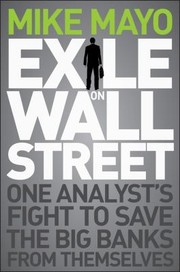
Exile on Wall Street by Mike Mayo
An analyst who kept saying sell when the banks paying the bills wanted buy. What publishing honest verdicts costs, and why it compounds anyway.
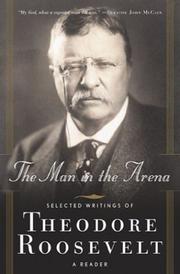
The Man in the Arena by Theodore Roosevelt
The credit belongs to the one actually in the arena, marred by dust and sweat. This museum keeps score honestly, but only for those who dared.

Bond Markets, Analysis, and Strategies by Frank J. Fabozzi
The standard tour of bond mechanics: duration, convexity, and structure, from Treasuries to securitized paper.
The Handbook of Fixed Income Securities by Frank J. Fabozzi
The fixed-income desk reference. When someone says "check Fabozzi," they mean this shelf-bender.
The xVA Challenge by Jon Gregory
What a derivative really costs once counterparty risk, funding, and capital are priced in. The alphabet soup (CVA, FVA, KVA) decoded by its standard text.
Modelling, Pricing, and Hedging Counterparty Credit Exposure by Cesari et al.
How dealers actually simulate the paths of what a counterparty might owe them. Exposure as a distribution, not a number.

Modern Derivatives Pricing and Credit Exposure Analysis by Lichters, Stamm & Gallagher
CSA-aware pricing, XVA, exposure simulation and backtesting, the post-2008 plumbing that changed what "price" means.

Modelling Single-name and Multi-name Credit Derivatives by Dominic O'Kane
Credit derivatives from a single CDS to index tranches, the machinery of trading default risk itself.
Credit Risk: Modeling, Valuation and Hedging by Bielecki & Rutkowski
The rigorous mathematics of default: hazard rates and filtrations for readers who want proofs, not vibes.

Interest Rate Models: Theory and Practice by Brigo & Mercurio
The interest-rate modeling bible. Short rates to market models, with smile, inflation, and credit; encyclopedic and honest about what breaks.
Pricing and Trading Interest Rate Derivatives by J.H.M. Darbyshire
Swaps as actually traded: curve building, risk, and market conventions from the practitioner's chair.
Dynamic Hedging by Nassim Nicholas Taleb
Taleb before the essays. Managing vanilla and exotic option books in the wild, where the greeks misbehave exactly when it matters.

Foreign Exchange Option Pricing by Iain J. Clark
FX options for practitioners: the quirks (two currencies, two rates, smile conventions) that equity-trained quants trip over.
FX Options and Structured Products by Uwe Wystup
The FX structuring cookbook. How the products clients actually buy are built and hedged.
FX Options and Smile Risk by Antonio Castagna
The FX volatility smile from a trader who managed it: vanna-volga and the risks that live between the strikes.
Market Models: A Guide to Financial Data Analysis by Carol Alexander
Financial econometrics for people who use it: GARCH, cointegration, and PCA with the practitioner's warnings attached.
Handbook of Price Impact Modeling by Kevin Webster
Your own trades move prices against you. The formal treatment of the friction this museum measures crudely.
Convex Optimization by Boyd & Vandenberghe
The language every portfolio optimizer speaks underneath, and the legendary text is free from Stanford's own site.

Mathematics for Machine Learning by Deisenroth, Faisal & Ong
The linear algebra, calculus, and probability under every model in this museum, also free from the authors, generously.
Fortune's Formula by William Poundstone
Kelly, Shannon, and Thorp, and how a 1956 paper on noisy telephone lines became the mathematics of bet sizing. The museum's sizing caution has its family tree here.

A Man for All Markets by Edward Thorp
The man who pointed Kelly at blackjack, then at Wall Street. Edge is common; surviving your own bet size is rare.
Chokepoints by Edward Fishman
Economic warfare's operating manual: leverage lives not in reserves but in the narrow passages the world's flows must cross. The museum renders it as a nightly instrument panel.

Advanced Portfolio Management by Giuseppe Paleologo
The quant's guide for fundamental investors: your P&L is alpha plus factor noise, and only one of them is your paycheck. Hedge the factors, keep the idio, size by risk not conviction, pre-commit the drawdown rules. Research note #4 is this book's tradition, practiced.
Negotiation Mastery by Simon Horton
BATNA is a reservation price with a pulse, the same margin-of-safety the gates enforce, pointed at a career; never open a negotiation whose walk-away you have not already backtested, and value-creation-before-claiming is just breadth before the bet.

Leveraged Trading by Robert Carver
Once you have an edge, position sizing is the whole game. Carver's risk-target-first framework is my stress book in a retail wrapper: fix the loss you can survive, and let that cap the bet, never the other way round.
Evidence-Based Technical Analysis by David Aronson
The book that put a t-stat to the chart-reader's claims: data-snooping bias, multiple testing, White's Reality Check; it is the intellectual foundation of my multiplicity deflator and the reason 29 of 158 "significant" alphas collapse to zero.
Systematic Trading by Robert Carver
Rules beat discretion mainly by removing the human from the moment of maximum fear. "No untested rule ships" and cost-aware sizing are the maker-checker split and the turnover budget, written for a solo book.
Quantitative Trading by Ernest P. Chan
The honest starter kit: most backtests lie, and the reasons (look-ahead, survivorship, cost naivety) are exactly the leaks stages 3-4 exist to catch; the manual checklist my pipeline automates.

Algorithmic Trading & DMA by Barry Johnson
Execution is where paper alpha goes to die. The market-impact and order-type detail behind my square-root capacity law, and the reason a signal's Sharpe is an upper bound before a single share trades.
Trading and Exchanges by Larry Harris
The microstructure bible: who trades, why, and who pays the spread; it names the liquidity-provision return my reversal signals earned gross and the cost stress erased, and it is the source text for the cost model itself.
Inside the Black Box by Rishi K. Narang
The clean taxonomy of what a quant fund actually is (alpha, risk, cost, execution as separable modules), and a working definition of the line between a data-mined pattern and a thesis, which is exactly the line the gates police.
Building Winning Algorithmic Trading Systems by Kevin J. Davey
A world-champion trader's confession that most of his own systems fail out-of-sample. The incremental-build and Monte-Carlo-the-equity-curve discipline is my IS/OOS holdout and bootstrap, learned the hard way.
My Life as a Quant by Emanuel Derman
The physicist's memoir on models as metaphors, not truth, a standing caution that the map (FF5, the HMM, Heston) is never the territory, and the most dangerous moment is when a model starts being believed.

Time Series Analysis by James D. Hamilton
The graduate reference under the hood. The estimator behind my Newey-West errors and the Markov-switching regime model both live in these pages; when a stage-4 method needs defending, this is the citation.

The New Market Wizards by Jack D. Schwager
The interviews reduce to one finding: edge is common, risk control is the survivor trait. Every wizard runs a different signal and the same religion about position sizing, which is the stress book's whole argument.

Best Loser Wins by Tom Hougaard
The half the statistics can't hold. The same person who built the gates must obey them mid-drawdown; a behavioral counterweight to a shelf full of edges, on why the discipline is the asset, not the signal.

Irrational Exuberance by Robert J. Shiller
The book behind the Tulip Wing: bubbles are a feedback loop between price and story, and the CAPE chart in chapter one is the reason every valuation claim here must name the regime it was measured in.

Animal Spirits by George A. Akerlof & Robert J. Shiller
Confidence, fairness and stories are not noise around the model, they are inputs to it; a caution against any signal whose thesis requires everyone to stay rational.

Narrative Economics by Robert J. Shiller
Stories spread like epidemics and move prices before fundamentals confirm them, which is exactly why the Tulip Wing watches attention as well as price.
Money Changes Everything: How Finance Made Civilization Possible by William N. Goetzmann
Finance as a 5,000-year technology rather than a modern casino; the long view that makes a 21-year backtest look like the thin slice of history it is.
The Great Mirror of Folly: Finance, Culture, and the Crash of 1720 by William N. Goetzmann (ed.)
The 1720 bubble told through its own satire and art, the Blowup Wing's oldest exhibit and proof that the crowd's madness is a repeat performance, not a novelty.
The Equity Risk Premium: Essays and Explorations by William N. Goetzmann & Roger G. Ibbotson
The premium everyone assumes is a constant is an estimate with enormous error bars and a survivorship problem, which is the whole argument for the gates.

The Entrepreneurial Venture by William A. Sahlman, Howard Stevenson, Michael Roberts & Amar Bhide (eds.)
People, opportunity, context, deal, applied to ventures and equally to hypotheses; and the standing reminder that the projection is the least trustworthy page in any plan.
The Merchant Bankers by Joseph Wechsberg
The houses whose only real asset was a name, lending it on a phone call in thirty minutes because a century of kept promises made the word bankable, the original proof that reputation is capital.
Understanding the Trans-Pacific Partnership by Jeffrey J. Schott, Barbara Kotschwar & Julia Muir
Careful, credentialed analysis of a treaty the United States walked away from four years after publication, kept as a reminder that rigorous policy work is still hostage to a political decision no model contains.
The Trans-Pacific Partnership and Asia-Pacific Integration: A Quantitative Assessment by Peter A. Petri, Michael G. Plummer & Fan Zhai
General-equilibrium models put the annual gain at $104 billion by 2025 on the TPP track. The United States withdrew in 2017, and 2025 arrived with the modeled treaty never in force. Filed beside Cline and Wolff as a second specimen of the confidently precise number, and as evidence that model sophistication and forecast accuracy are unrelated.
Introduction to Econometrics by James H. Stock & Mark W. Watson
The applied standard, and the reason every t-statistic on this site is HAC-corrected; its chapters on heteroskedasticity and autocorrelation are the working manual for the estimator the gates depend on.
Introductory Econometrics: A Modern Approach by Jeffrey M. Wooldridge
States the assumptions plainly enough that you can tell when they fail, which is the only reason to own an econometrics text; the omitted-variable-bias treatment is the formal name for what this museum calls the alpha costume.

Mostly Harmless Econometrics by Joshua D. Angrist & Jörn-Steffen Pischke
Identification before estimation, and the discipline of asking what would have to be randomly assigned for a claim to be causal; a permanent check on a pipeline that can only ever measure association.

Econometric Analysis by William H. Greene
The reference you open when an estimator misbehaves rather than the one you read through, kept for the panel and limited-dependent chapters the crowding studies lean on.
Statistics 101 by David Borman
A beginner's guide, kept for register rather than method: when a note has to explain a deflated t-stat or a power curve to a reader who does not have one, this is how plainly it can be said. Its 1936 Literary Digest example, 2.1 million replies and still wrong because the sample was drawn from subscribers and car owners, is the museum's own EDGAR panel bug in someone else's words.